When the Story Changes Its Voice
Every print I've made for this collection so far has been high vibe on purpose. Bold gouache, blooming color, a rose big enough to take up a whole panel. That's been the voice of Tudor & Ash from the start — confident, saturated, unmistakably alive.
Then I started working on this one, and it didn't want any of that.
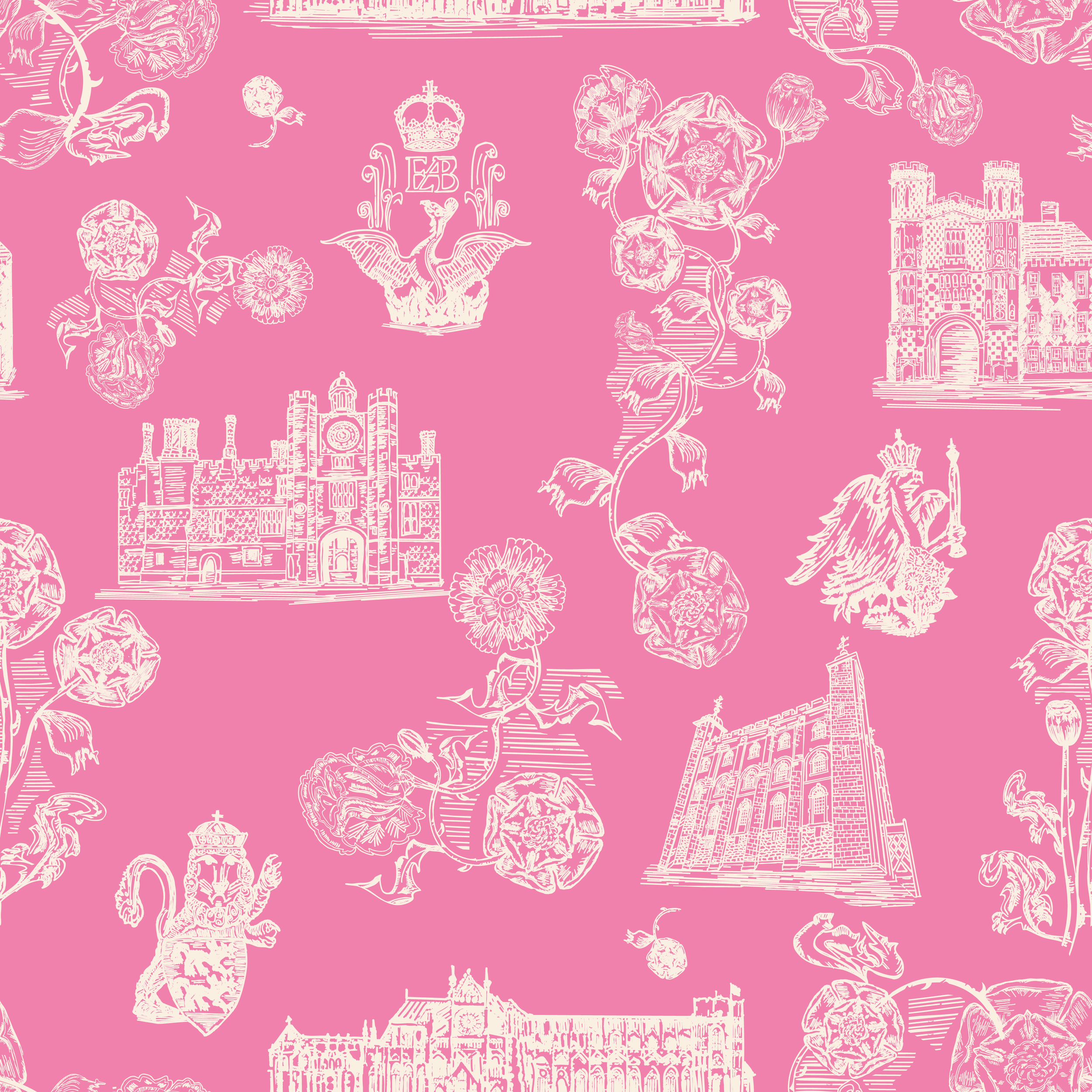
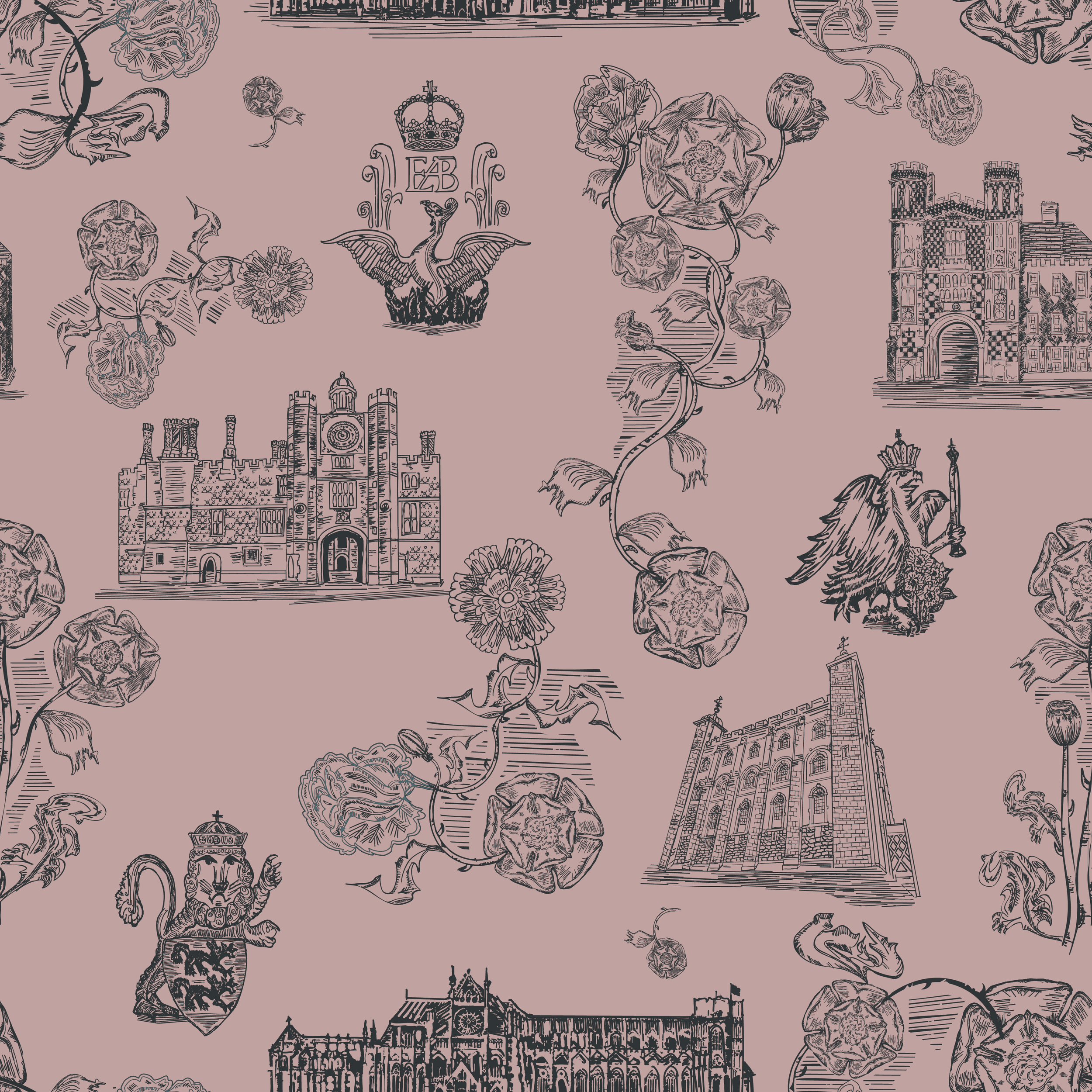
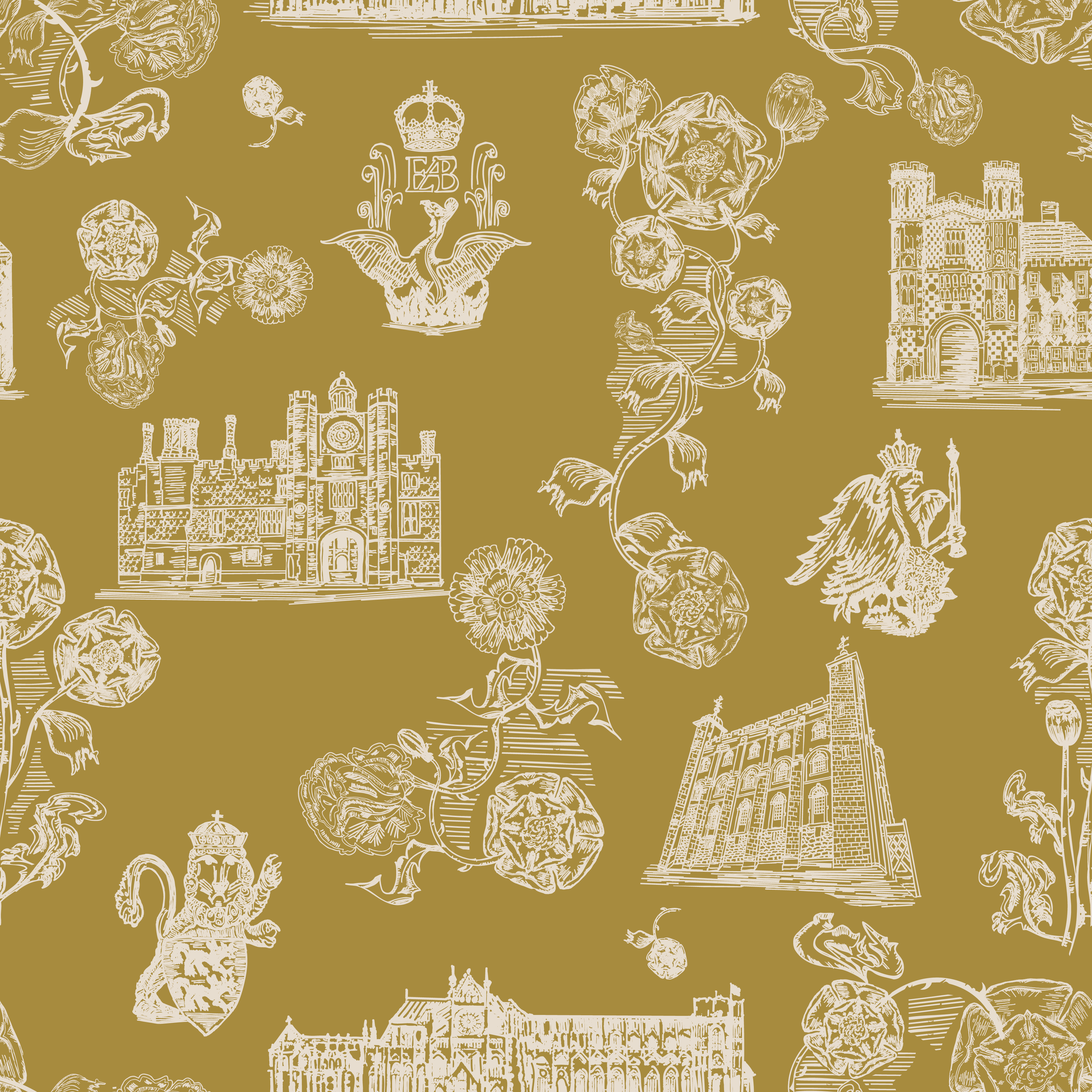
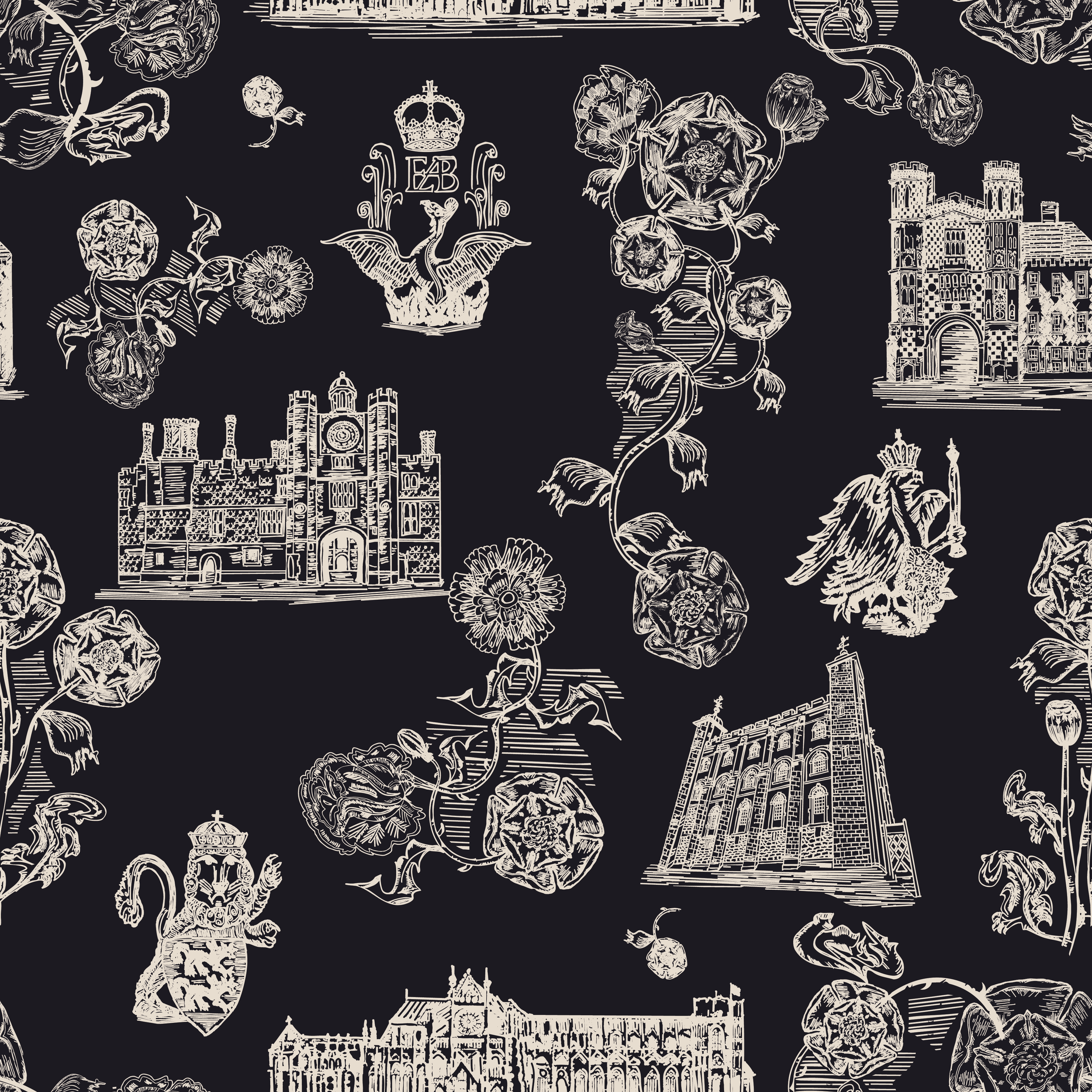
Joie De Tudor came out of the same research, the same history, the same people I've been living with for over a year now. But somewhere in the process it asked for something quieter. Instead of paint, it wanted line. Instead of color doing the emotional work, it wanted restraint — engraving-style detail, a controlled hand, something closer to an etching than a bloom.
And it turns out restraint suits this particular story, because it's dense with real things. A crowned monogram sits at the center of the print, styled after Elizabeth I's own Phoenix Jewel — a piece so deliberately ambiguous it reads as her initial and her mother's at once, E and A and B folded into one shape, a queen quietly carrying her mother's name inside her own. Nearby, a crowned falcon holds a scepter, standing on a stump breaking into rose — that's Anne Boleyn's badge, adopted at her coronation, a promise of renewal she didn't get to keep for long. A crowned lion guards a shield, the way one has always stood watch at Hampton Court's gate. And woven through all of it, the actual buildings this history happened inside — gatehouses, palace walls, the architecture that outlived everyone who walked through it.
None of that felt like it wanted to be interpreted through paint. It wanted to be recorded, the way an engraving records something rather than reimagining it.
I think the instinct came from the watercolor study I've been doing lately — going back to basics, rebuilding a kind of technical control I hadn't practiced in years. That kind of study doesn't stay contained to the class. It shows up in the work whether you plan for it or not.
So Joie De Tudor isn't the high-vibe version of this history. It's the version where the story gets to be told carefully. It's not a departure from Tudor & Ash — it's proof the collection can hold more than one voice.
I don't know yet exactly where this print lands — whether it stays this restrained or finds its way back toward color eventually. For now, I wanted to show you what it looks like when the story changes its register instead of its subject.